


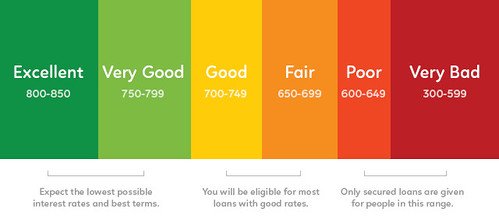
Credit Score for Mortgage Approval
By CardRewardLab Team
Published On June 14, 2026
Disclosure: This mortgage-credit guide includes affiliate links, and we may earn a commission if you apply through them, at no additional cost to you here.
What Credit Score Do You Need for Mortgage Approval?
A 620 credit score is still a useful conventional-mortgage benchmark, but it is no longer a universal minimum. Since November 15, 2025, Fannie Mae’s Desktop Underwriter no longer requires a minimum third-party credit score for an automated underwriting casefile; it evaluates the full risk profile. Fannie Mae’s 2026 guide still lists 620 for many manually underwritten fixed-rate loans and 640 for manually underwritten adjustable-rate loans. Individual lenders can impose higher overlays.
FHA financing may be available with scores below 620, VA does not set a program-wide minimum score, and USDA underwriting has its own eligibility and lender requirements. Approval and good pricing are different outcomes. A borrower at 620 may qualify yet pay more through the mortgage rate, discount points, private mortgage insurance, or loan-level price adjustments than someone at 740 or 780.
Mortgage guidelines change, and each loan file is fact-specific. Confirm current requirements with multiple licensed lenders. A score estimate from an app is not an approval and may not match the mortgage score used in underwriting.
Score ranges by mortgage type
| Loan type | Useful score benchmark | Important qualification detail |
|---|---|---|
| Conventional, automated underwriting | No single Fannie Mae DU minimum; many lender products still expect roughly 620+ | Automated findings evaluate credit history, reserves, debt, property, and loan purpose |
| Conventional, manual underwriting | Fannie Mae lists 620 fixed-rate and 640 ARM in many cases | Exceptions and Freddie Mac rules can differ |
| FHA | 580 for maximum 96.5% financing under baseline FHA rules; 500–579 generally requires at least 10% down | Lenders commonly set higher overlays |
| VA | No VA-mandated minimum; many lenders use about 620 | Requires eligible service, a COE, satisfactory credit, income, and occupancy |
| USDA guaranteed | No one score guarantees approval; 640 has commonly supported streamlined processing | Income, property location, repayment ability, and lender rules matter |
| Jumbo | Often 680–740 or higher | Large reserves, lower debt ratios, and larger down payments are common |
[AFFILIATE CTA: editor’s-pick]
Conventional loans: 620 is a benchmark, not the whole rule
Conventional loans are not insured by FHA or guaranteed by VA or USDA. Conforming loans meet standards for purchase by Fannie Mae or Freddie Mac and stay within applicable loan limits. Lenders typically submit files to automated underwriting systems.
Fannie Mae made an important change in late 2025: Desktop Underwriter stopped requiring a minimum third-party score and now uses its proprietary risk assessment to determine whether a casefile meets its minimum credit-risk threshold. A low score does not mean automatic approval; DU examines payment history, utilization, debt, reserves, loan-to-value ratio, property characteristics, and other data. Lenders still obtain scores for most loans, use them for pricing, and may impose their own minimums.
For manual underwriting, Fannie Mae’s April 2026 guide lists a 620 minimum for fixed-rate loans and 640 for adjustable-rate mortgages in the general cases shown. Freddie Mac and individual lender requirements are not identical. A lender can decline a file that technically fits agency rules because of overlays, documentation concerns, or overall risk.
FHA: lower scores, but mortgage insurance matters
Baseline FHA rules permit maximum financing—commonly a 3.5% minimum required investment—for borrowers with a minimum decision credit score of at least 580. Scores from 500 through 579 generally require a minimum 10% down payment. Many FHA lenders do not approve at the program floor and instead require 580, 600, or 620.
FHA can help after limited credit or past problems, but it includes an upfront mortgage insurance premium and annual mortgage insurance paid monthly. Depending on loan-to-value ratio and term, annual mortgage insurance can last for the life of the loan unless the borrower refinances or sells. Compare the full five- or ten-year cost with conventional financing, not just the initial rate.
FHA property standards, debt ratios, compensating factors, gift documentation, and identity-of-interest rules also apply. A 580 score alone does not make an unsafe budget affordable.
VA: the agency has no minimum, lenders often do
The Department of Veterans Affairs states that it does not require a minimum credit score for a VA-guaranteed mortgage. The lender reviews the borrower’s overall payment patterns, income, residual income, debts, housing history, and eligibility. The VA’s 2026 buyer guide notes that lenders may typically look for 620, although practices vary and a larger down payment or strong file may affect the decision.
Eligible borrowers need a Certificate of Eligibility and generally must occupy the property. VA loans may require no down payment and do not charge conventional private mortgage insurance, but a VA funding fee can apply unless the borrower qualifies for an exemption. Shop VA-approved lenders because overlays, rates, origination charges, and service quality differ.
USDA: score is one part of rural-housing eligibility
USDA guaranteed loans can offer zero-down financing for eligible households purchasing an eligible property in a qualifying area. The program evaluates household income limits, repayment income, debt ratios, credit history, and property eligibility. A score near 640 has historically been useful for automated or streamlined processing, but it is not a universal approval guarantee and current lender overlays apply.
USDA loans charge guarantee fees and have occupancy restrictions. A borrower with a stronger score may still be ineligible because income exceeds the local limit or the property sits outside an eligible area.
Jumbo loans: strong files receive the broadest choice
A jumbo loan exceeds conforming limits for the property’s location. Because the lender cannot rely on standard agency execution, it sets portfolio or investor criteria. Minimum scores frequently start around 680 or 700, while the most competitive pricing may require 740 or higher. Lenders also expect substantial liquid reserves, documented income, lower debt-to-income ratios, and larger down payments.
Self-employed borrowers may need two years of personal and business returns, year-to-date profit-and-loss statements, balance sheets, and business-bank statements. A high score cannot compensate for unsupported income or insufficient reserves.
Which credit score does a mortgage lender use?
Free consumer apps often show VantageScore 3.0 or a newer generic FICO model. Mortgage underwriting has historically used older bureau-specific FICO versions, while the industry is transitioning toward FICO 10T and VantageScore 4.0 under FHFA implementation. The score a lender pulls can differ materially from the one in a credit-card app.
When three scores are obtained for one borrower, Fannie Mae guidance generally uses the middle score; with two, the lower is used. With multiple borrowers, agency rules determine a loan-level score and pricing methodology. A co-borrower with weak credit can influence the loan even when the other applicant has excellent credit.
Ask the lender which model and score is being used for eligibility and which for pricing. Do not buy a random monitoring subscription expecting an exact match.
How score affects the mortgage price
Conventional pricing uses credit score and loan-to-value ratio among the inputs for loan-level price adjustments. A lower score may produce a higher rate, more upfront points, or both. Private mortgage insurance pricing also considers score, down payment, occupancy, loan type, and other factors.
A lender quote must be compared through annual percentage rate, points, lender credits, origination charges, mortgage insurance, and cash to close. A “lower rate” bought with several points may not pay back before the borrower sells or refinances. Request Loan Estimates from multiple lenders on the same day for the same loan structure, because market rates move.
A 20-point score improvement can matter when it crosses a pricing tier, but the exact tiers and adjustments change. Ask the loan officer to price the file at the current score and at the next relevant band. Then compare the cost of waiting with the potential savings.
Approval depends on more than credit
Debt-to-income ratio
Underwriters divide recurring monthly debt obligations by qualifying gross monthly income. The proposed housing payment includes principal, interest, property taxes, homeowners insurance, association dues, and mortgage insurance where applicable. Student loans, auto payments, cards, alimony, and other obligations can count. Automated systems may approve ratios that a manual underwriter will not, particularly with strong reserves and credit.
Down payment and loan-to-value ratio
A larger down payment reduces lender exposure and may improve pricing, but draining every reserve is risky. Closing costs, prepaid taxes and insurance, repairs, moving, and emergency savings require cash beyond the down payment.
Income stability and documentation
W-2 employees, commissioned workers, contractors, business owners, and retirees have different documentation. A recent job change within the same field may be acceptable, while variable income often requires a history and averaging. Undocumented cash income does not qualify because it cannot be verified.
Reserves and property
Money remaining after closing can compensate for risk. The required number of months depends on loan, property count, occupancy, and underwriting findings. The home must also appraise and meet program standards. Strong credit cannot fix an unsupported purchase price or an ineligible condominium.
What to do six months before applying
- Pull all three reports: use AnnualCreditReport.com and dispute factual errors with documentation.
- Never miss a payment: set full-statement autopay on cards and verify it.
- Reduce reported utilization: pay revolving balances before statement close when necessary, without draining closing reserves.
- Stop new applications: avoid cards, auto loans, and buy-now-pay-later obligations unless essential.
- Document funds: keep bank statements clean and retain records for large deposits, gifts, transfers, and asset sales.
- Stabilize income: discuss job or business changes with a lender before acting.
- Compare programs: ask for conventional, FHA, VA, or USDA scenarios when eligible.
Do not close old no-fee cards solely before underwriting. Closing can reduce available credit and raise utilization. Do not move money among accounts repeatedly; it creates paperwork to source deposits. Avoid co-signing because the new payment may count even when someone else promises to pay.
Rate shopping and credit inquiries
Modern scoring models generally group multiple mortgage inquiries made within a designated shopping window as one for scoring, although the window varies by model. Each inquiry can still appear on the report. Complete serious lender comparisons within a concentrated period and obtain written Loan Estimates after providing consistent details.
A prequalification based on a soft pull is only an early estimate. A preapproval with verified income, assets, and credit is stronger but remains conditional. Do not open accounts or finance furniture between preapproval and closing; lenders commonly refresh credit and verify employment.
What score should you target?
Below 580: focus on report accuracy, delinquency resolution, cash reserves, and housing counseling before shopping. Some FHA lenders may work with scores from 500 to 579 and 10% down, but options are limited and pricing may be costly.
580–619: FHA may be the broadest route, and eligible VA borrowers should compare specialist lenders. Conventional automated findings are possible in some cases, especially after Fannie Mae’s change, but do not assume acceptance.
620–679: conventional options expand, yet mortgage insurance and rate pricing can still be significant. Compare FHA’s insurance structure with conventional PMI over the expected holding period.
680–739: approvals and pricing generally improve. Continue reducing revolving debt and avoid inquiries rather than chasing small score hacks.
740 and above: borrowers often access more favorable conventional pricing bands, but loan-to-value, property, reserves, and income still matter. The very highest score is not necessary; optimize the total loan cost.
Bottom line
Use 620 as a shopping benchmark, not a universal mortgage rule. Fannie Mae DU can now assess casefiles without a minimum third-party score, FHA baseline rules reach lower, and VA sets no program-wide minimum. Lenders still impose overlays and price risk through rates, points, and insurance. Pull the correct reports, improve payment history and utilization, protect reserves, and compare written quotes from multiple lenders. The score opens doors, but the complete file determines which door is affordable.
amex gold reviewapprovalbest credit cards 2026cashback cardschase ink business cardscreditscoretipstravel rewards cards